Bring your own model
Sign in with the plan you already pay for.
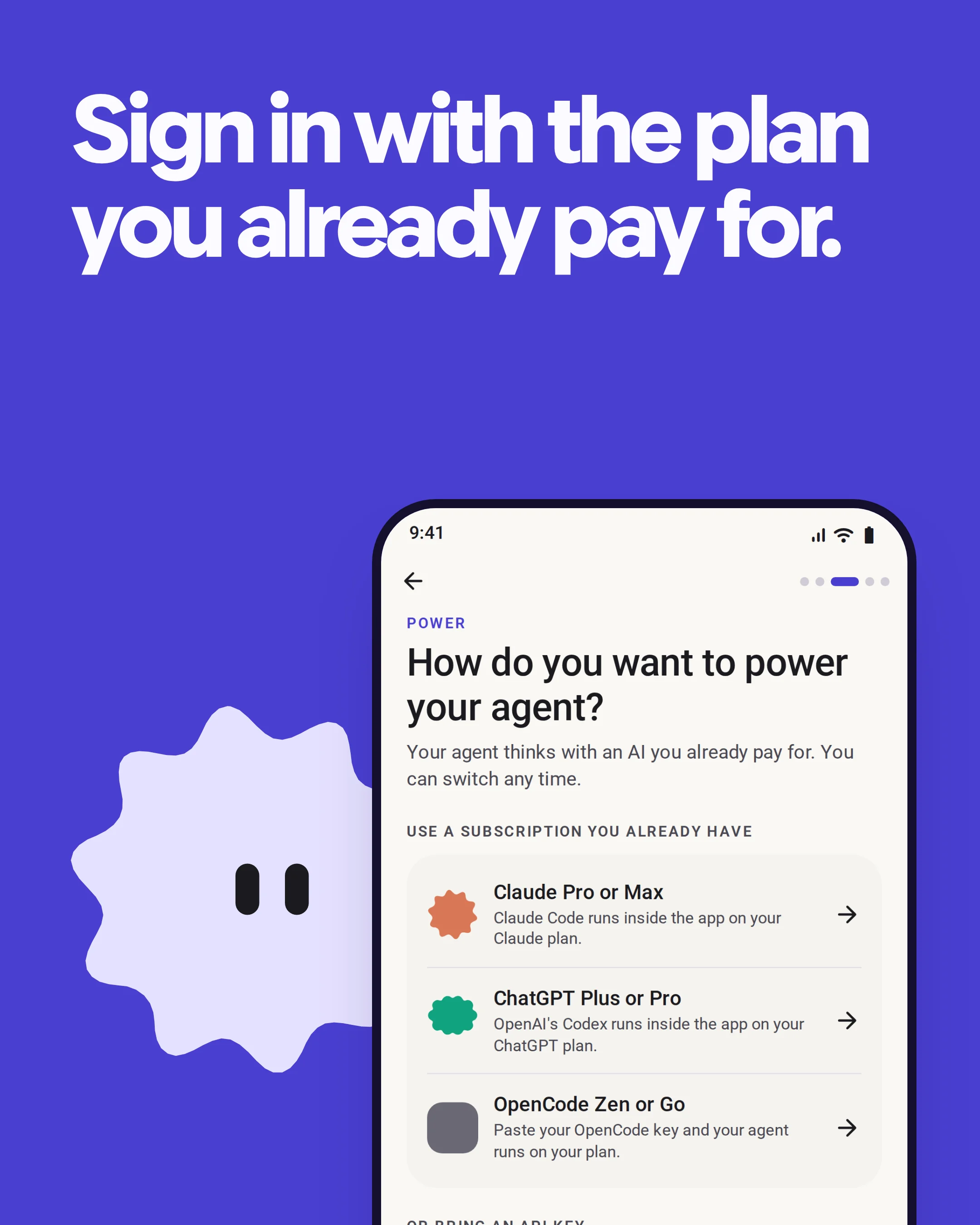
ChatGPT and Claude subscriptions run right on the phone. Or paste a key from DeepSeek, Gemini, OpenRouter, OpenCode, or point it at your own server.
An autonomous agent that's always on, right on your phone.
The best thing since Hermes.
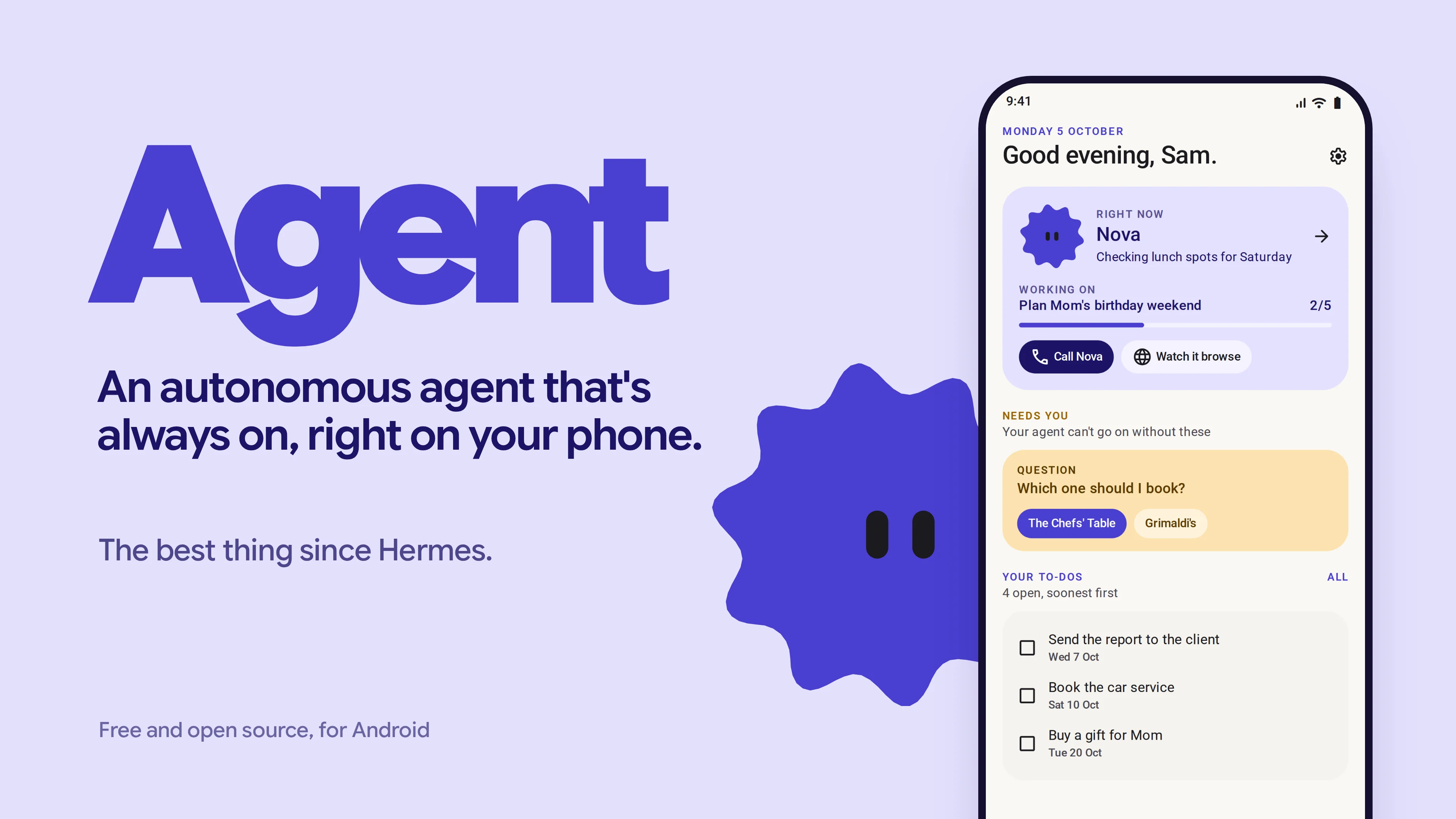
Straight off a phone. It searched Walmart and Target by itself, compared the 5 lb bags and came back with prices and links to buy.
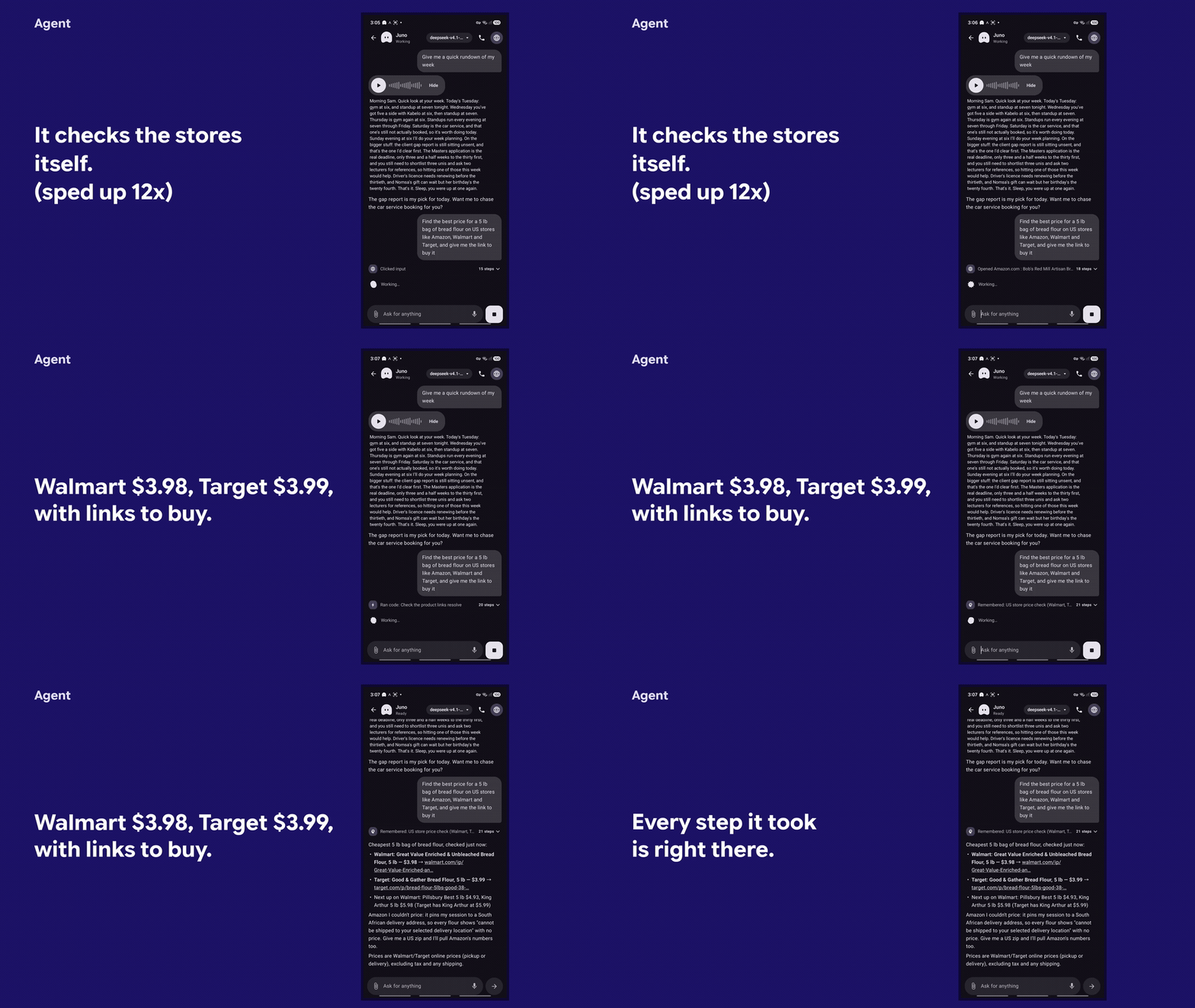
What it's working on, what needs you, and your to-dos. Open the app and you see where things stand.
ChatGPT and Claude subscriptions run right on the phone. Or paste a key from DeepSeek, Gemini, OpenRouter, OpenCode, or point it at your own server.
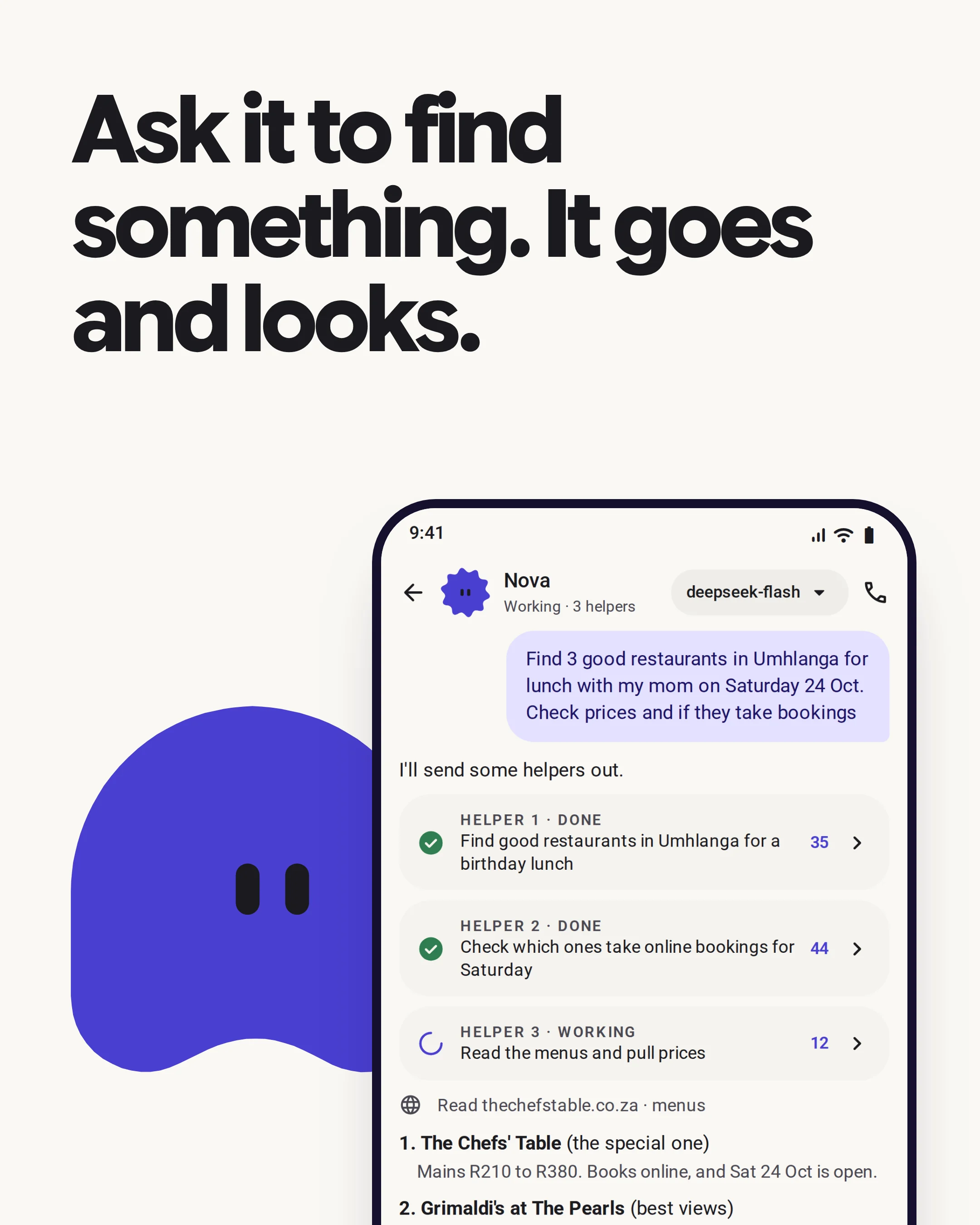
It has a browser of its own that keeps working while you use other apps. Helpers split the job up, and anything that costs money waits for your yes.
Take a school portal that shows your timetable and marks and has no API, say. You tell the agent the address. It opens the site in its own browser, works out how the pages get their data, and saves a few small tools for it.
Afterwards you ask "what homework is due this week" and it calls a tool. It doesn't click through the portal every time.
YouWhat homework is due this week?
The portal is only an example. The site I have actually mapped is amazon.co.za, its search and product pages, and the tools return prices, ratings and stock. The list on the phones is demo data, there to show the layout.
To learn a site the agent can see what the site sends, read the page, and run a script inside the page while you are signed in. That takes a while, once. After that a call is quick and steady.
If a tool breaks, the agent reads why and repairs that one tool. It doesn't start the whole site again.
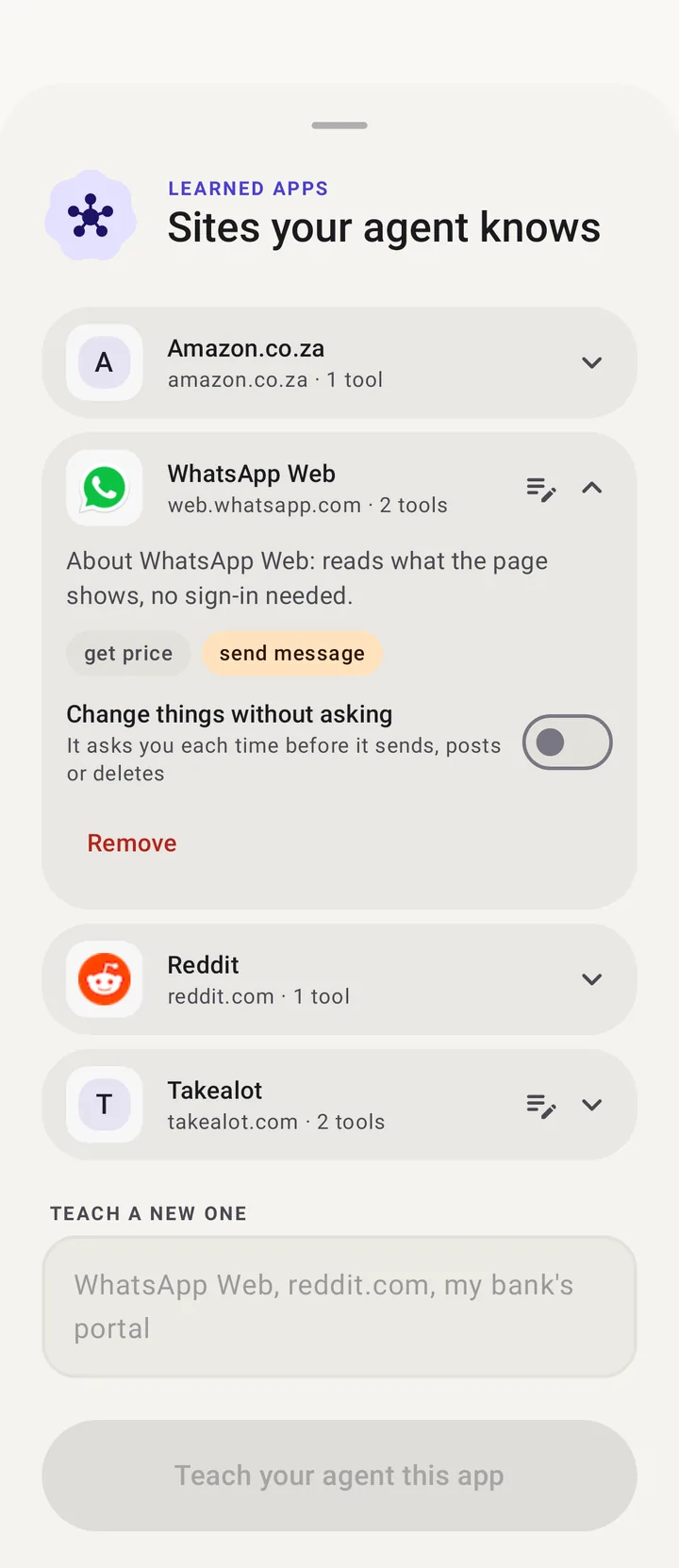
When it finishes mapping, you see the set of tools and say yes or no. Anything that sends, posts or deletes asks you first, unless you have chosen to trust that app. The agent can't trust itself.
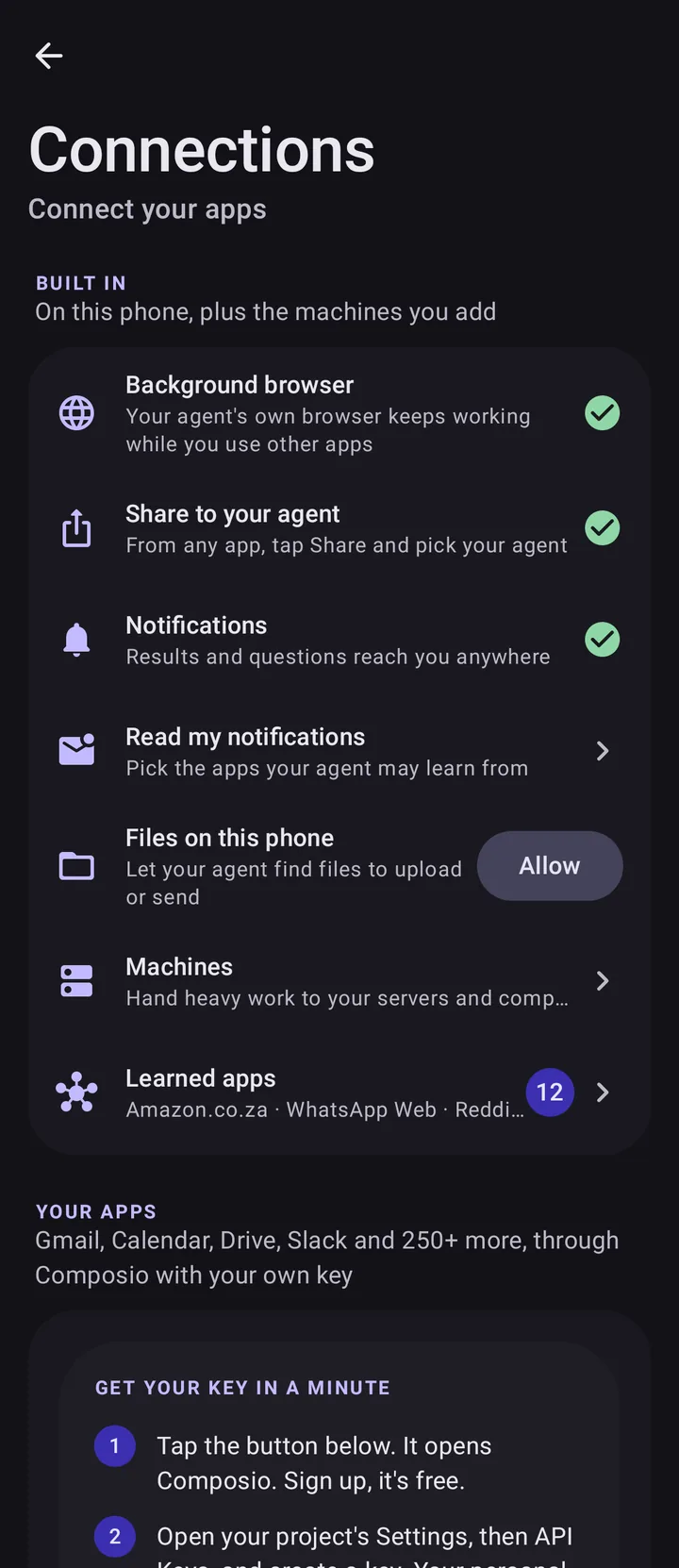
The tools run inside your own signed-in browser session. You manage them in Connections, under Learned apps. It is one line there, and it opens a sheet with a logo for each app.
Where it stops. Mapping needs a capable model: a small fast one can struggle to write the tools, and a stronger one does it reliably. A site that shows a CAPTCHA every time won't work. Check a site's own terms before you point the agent at it.
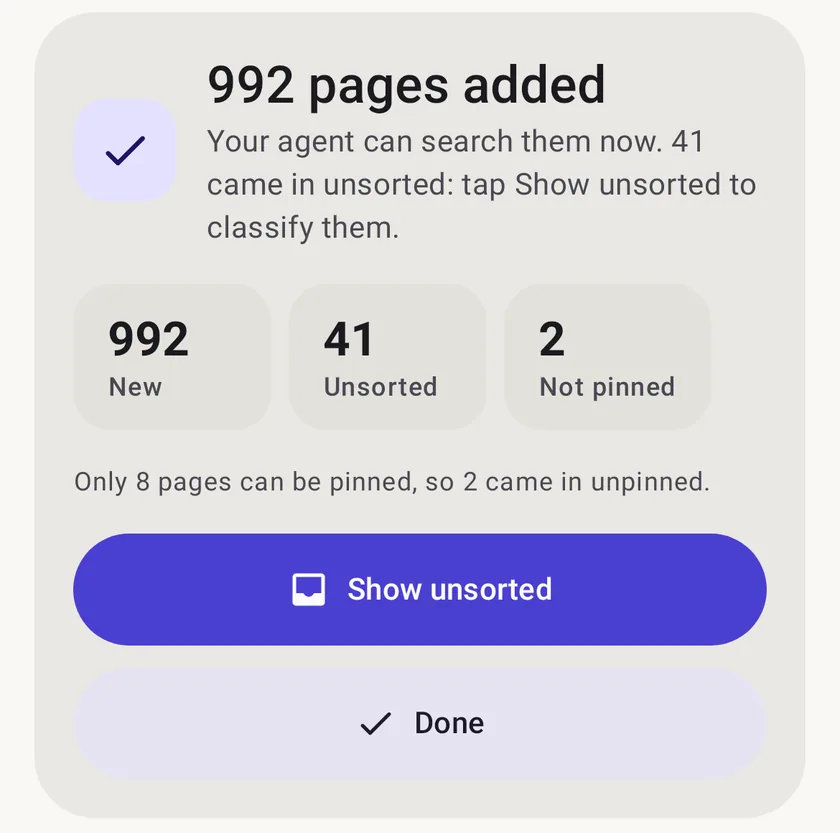
Export gives you a zip of plain markdown pages that any text editor can open. Import takes a zip like that back, and it also takes notes from other tools. When it is done the app tells you how many pages came in and how many are still unsorted.
When the agent asks to do something, you can refuse with one tap.
A shopping answer can come back as a row of product cards that you swipe through.
You can now connect a second Slack, Notion or Teams workspace next to the first.
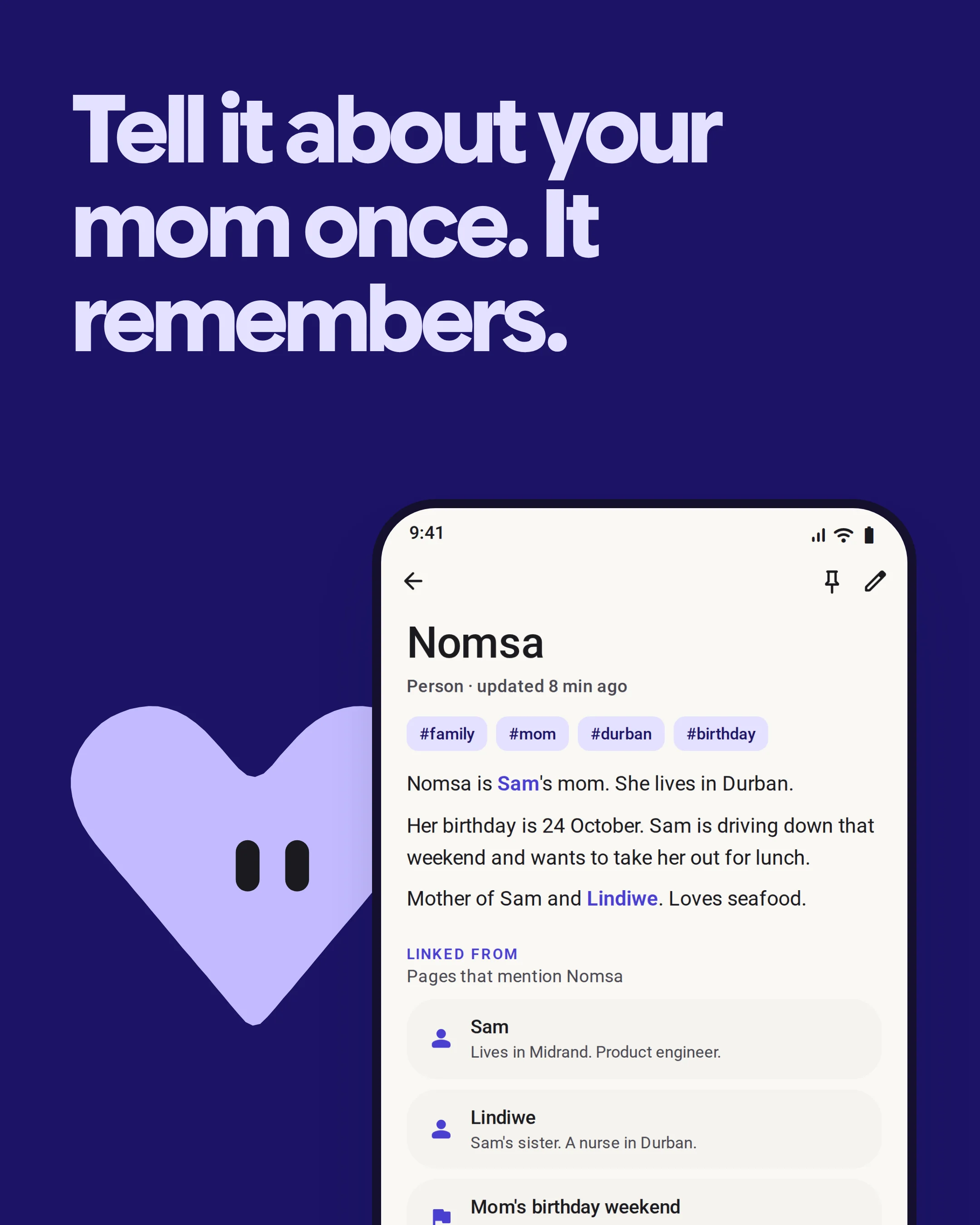
Everyone and everything it learns about gets a page in a wiki on your phone, linked to the rest. You can read and change every word.
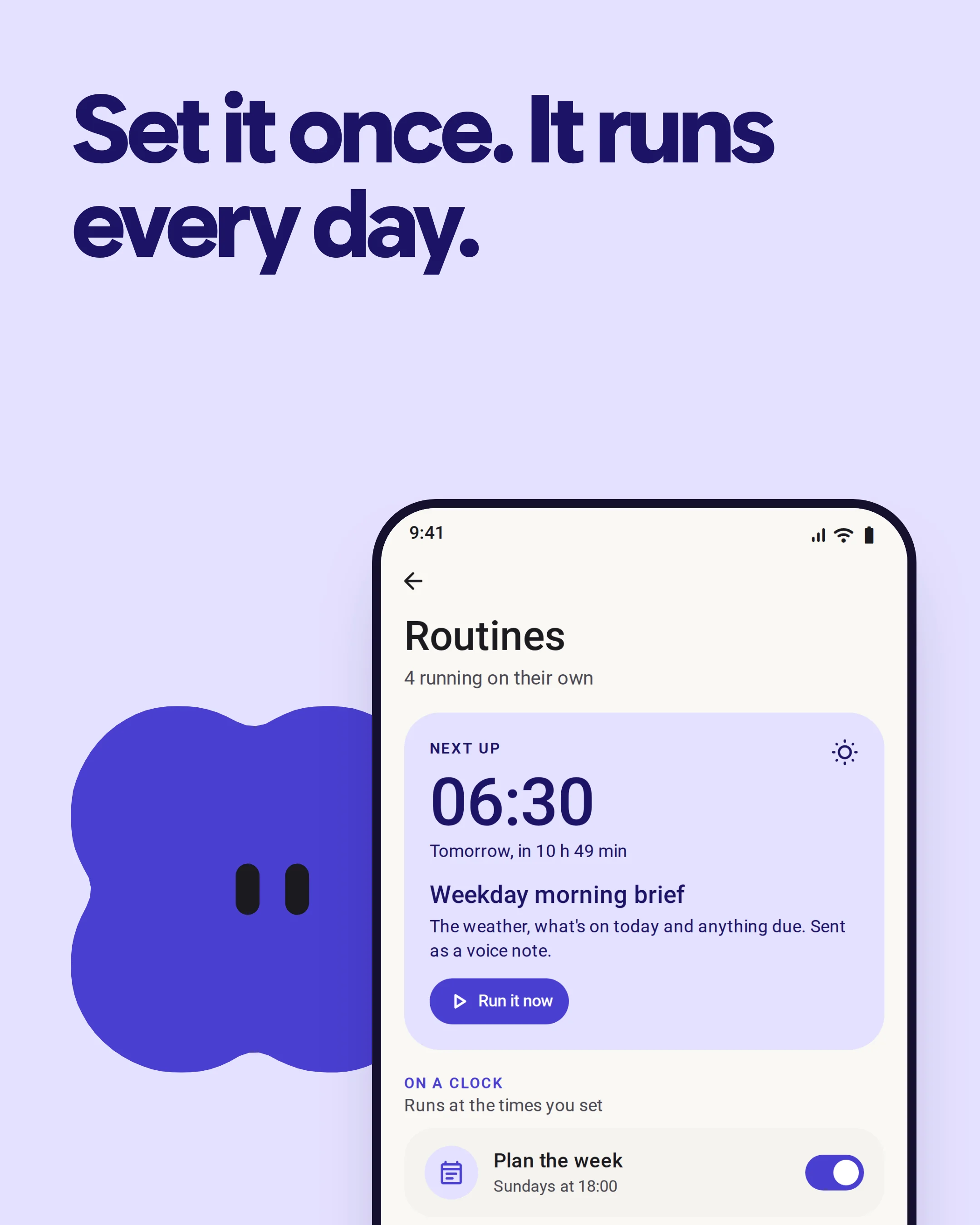
It can brief you every morning or keep an eye on a price for weeks. It runs on a clock or when a notification comes in, and only bothers you when something actually changed.
Give it a name and a face. The whole app takes its colour, right down to the icon on your home screen.
No account and no server of ours. Nothing leaves the phone except calls to the model you choose.
This build is version 0.11.22, release notes on GitHub. The file is Agent-0.11.22.apk, 360,664,243 bytes, about 360 MB.
Space. It needs about 2 GB of free space to install. If Android says "App not installed", free some space or uninstall an older Agent first. Uninstalling removes the old one's data, so back up anything you need first.
On a computer, sha256sum Agent-0.11.22.apk should print the first value. The second is the app's signing certificate; apksigner verify --print-certs Agent-0.11.22.apk prints it.